LONDON (Reuters) - When Russian President Vladimir Putin was preparing for last month’s nationwide vote on potentially extending his rule until 2036, he let the veil slip on part of the calculation behind the constitutional change.
“If this doesn’t happen, then in about two years – and I know this from personal experience – the normal rhythm of work of many parts of government will be replaced by a search for a possible successor,” Putin said in an interview with state TV channel Rossiya. “We must be working, not looking for successors.”
The Kremlin won the vote, declaring it a triumph. The constitution now will allow Putin to return to power for another two six-year terms. Independent monitor Golos, however, reported unprecedented vote fraud, and political opponents say the elaborate maneuvering over the ballot has weakened Putin’s legitimacy. Public discontent over Putin’s rule has begun to spill into the open in Russia’s Far East, where tens of thousands have marched in protest for the past three weekends.
Beyond Putin’s own comments to state TV, the Kremlin isn’t explaining its calculus about the constitutional change. But a first-hand account by a former insider of how the Kremlin tried to manage the handover of power in 2008, when Putin first faced a constitutional limit on his presidency, provides a glimpse into the under-the-carpet power struggles of Moscow’s ruling elite and some of the issues the Russian leader must grapple with.
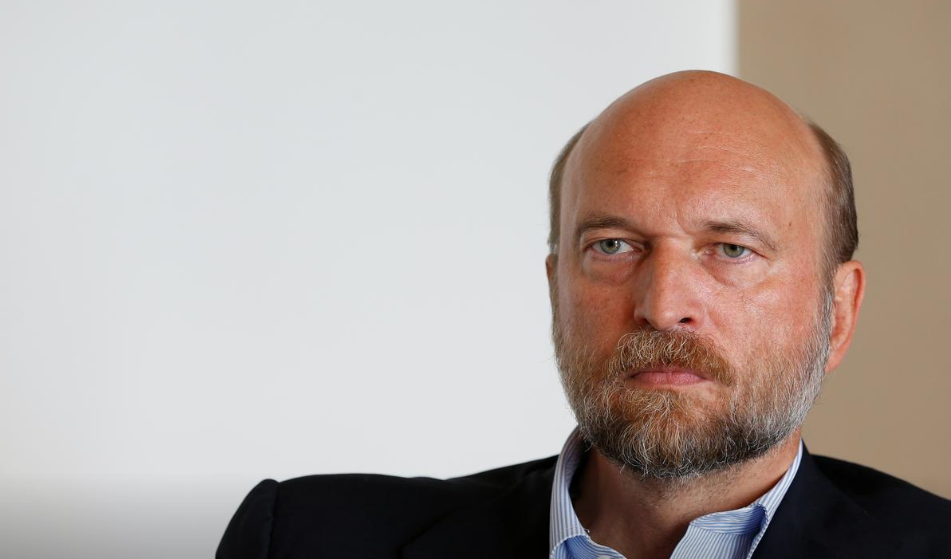
Since at least 2006, former Kremlin adviser Sergei Pugachev told Reuters, Putin has been grappling with the question of succession. Once known as the Kremlin’s banker, Pugachev played a key role in Putin’s rise 20 years ago. His business interests spanned military shipyards, coal and construction, and he sat as a senator in parliament’s upper chamber. Today he is in deep conflict with his former allies, accused by Russian authorities of bankrupting the bank he co-founded, a charge Pugachev denies. He fled to Britain and then France, where he currently lives, after London’s High Court in 2014 ordered his assets frozen at Russia’s request.
Now, Pugachev has spoken for the first time about Putin’s decision-making in the run-up to 2008. He told how the president was often hostage to the will of his inner circle of former KGB men and associates from his hometown of St Petersburg.
The question of handing over power has always been the “biggest headache” of Putin’s rule, Pugachev told Reuters. For Putin, the succession “was always a serious, personal stress. He never intended to hand over control of the country to anyone.” Putin saw himself running Russia behind the scenes as the father of the nation, said Pugachev, but finding a successor who would go along with this plan “was always a big problem.”
Kremlin spokesman Dmitry Peskov declined to comment about Pugachev’s account of events.
In 2007, Pugachev was still a consummate Kremlin insider, close to many of the powerful men around Putin, the so-called siloviki, mostly drawn from Russia’s security services. He says he was in the room when several key decisions were made. Photos and other documentary materials reviewed by Reuters show Pugachev held a position near the pinnacle of Kremlin power right up to 2008, and support some elements of his account.
ADVERTISEMENT
The photos show Pugachev’s teenage sons hanging out with Putin’s daughters at his dacha. Other pictures show Pugachev dining at his dacha in 2005 with the leading security men around Putin. These included Nikolai Patrushev, then the head of the Federal Security Service, or FSB, successor to the KGB; and Igor Sechin, one of Putin’s KGB allies from St Petersburg, who at the time of the photo was deputy head of the Kremlin administration.
A LOOMING DEADLINE
The first time Putin considered changing laws to prolong his rule was in the second term of his presidency, Pugachev said.
By the summer of 2007, Sergei Ivanov, Putin’s first deputy prime minister and the youngest ever general in Russia’s foreign intelligence service, was widely considered the frontrunner to become president the following year, ahead of another Putin ally, Dmitry Medvedev. The constitution dictated that Putin should step down in 2008 upon expiry of his second consecutive term.
Members of Putin’s inner circle feared that if Ivanov got the top job, he would cut them out of power. They began briefing Putin against Ivanov, said Pugachev. “They began telling Putin that Ivanov is very dangerous. He is very aggressive. He will take power and then you will never be able to get rid of him. They were collecting all kinds of kompromat (compromising information) on Ivanov. Almost everyone was against him.”
Kremlin spokesperson Peskov said Ivanov, now the president’s special representative for nature, ecology and transport, would not be able to comment. Reuters couldn’t reach him directly.
Pugachev too had fallen out with Ivanov, after failing to win a major shipbuilding contract in 2006, when Ivanov was the defence minister. That Ivanov seemed to be a loner only boosted him in Putin’s eyes, according to Pugachev. It meant Ivanov “couldn’t coordinate with anyone against Putin.”
Behind the scenes, another option to extend Putin’s hold on power was also under consideration. Pugachev said that, at Putin’s request, Pugachev directed a group of lawyers headed by a co-author of the Russian constitution, Sergei Shakhrai, to look into ways Putin could run for a third term. The lawyers proposed changing the law through a two-thirds majority vote in parliament. Putin had consistently opposed changing the constitution but, said Pugachev, he wanted “a second option just in case.” Shakhrai declined to comment.
Ivanov’s candidacy ended in August 2007, according to Pugachev. Putin had just announced the restoration of long-haul military flights capable of reaching American shores for the first time in 15 years, a move hailed by Russian newspapers as a demonstration of Moscow’s restored military might.
ADVERTISEMENT
Six days after Putin’s triumphant announcement, Ivanov said in a television interview the flights did not signify a return to the Cold War. By appearing to speak for the Kremlin, he had overstepped the mark.
“Sechin brought a tape of Ivanov’s interview to Putin,” Pugachev said, describing a meeting between Pugachev, Putin and Sechin. Sechin, according to Pugachev, told the president: “‘Look, Vladimir Vladimirovich, you launched the bombers which have not flown for 15 years, since before the Soviet collapse. And Sergei Ivanov, who is no one – he isn’t even the president yet, he isn’t even the successor yet – he has already claimed [the project] as his own.”
“Sechin played on his ego,” Pugachev continued. “Putin has a thing about going down in history. This was his story, and Ivanov entered his territory…. It was an important psychological moment.”
A spokesman for Sechin declined to comment. Kremlin spokesman Peskov said he could not comment since he was not present.
Putin wanted a successor who would be president in name only and ready to make way at any moment, Pugachev said. After this incident, added Pugachev, the door was closed to Ivanov.
But time had run out to amend the rules so that Putin could run for a third term. The presidential election was to be announced by the end of 2007, with the vote itself in March 2008. By law, any legal change allowing Putin to remain in power had to happen at least six months prior to an election being called. Putin “slept through” the opportunity for a third term, Pugachev said.
Instead, in September 2007, Putin announced he was appointing as prime minister Viktor Zubkov, a little-known former state farm director who at the time was head of Russia’s anti-money laundering watchdog. The 66-year-old Zubkov was suddenly in the frame to succeed Putin.
Pugachev said Putin was weighing making Zubkov president for one year, after which Zubkov could say he had fallen ill, and Putin could return. “I discussed this with him personally. With Putin and with Zubkov,” Pugachev said. But Putin rejected the idea. “He told me it wouldn’t look very good.”
Reuters couldn’t reach Zubkov. Kremlin spokesman Peskov declined to comment on the matter.
Finally, on December 10, just as the election was about to be declared, Putin announced Dmitry Medvedev, a St Petersburg lawyer who’d long worked in Putin’s shadow, was his favoured candidate to take over as president. Pugachev said Putin’s circle believed that Medvedev, who’d served as Kremlin chief of staff and most recently alongside Ivanov as a first deputy prime minister, would be the most malleable successor and, importantly, the most willing to make way for Putin should Putin decide to return to the presidency. Similar views of the Putin-Medvedev partnership were widely reported in Russia at the time.

Russia's unmanned Luna-25 spacecraft has crashed into the Moon after spinning out of control, officials say.

Donald Trump has confirmed that he will not take part in Republican presidential debates with his rivals in the race for the White House.