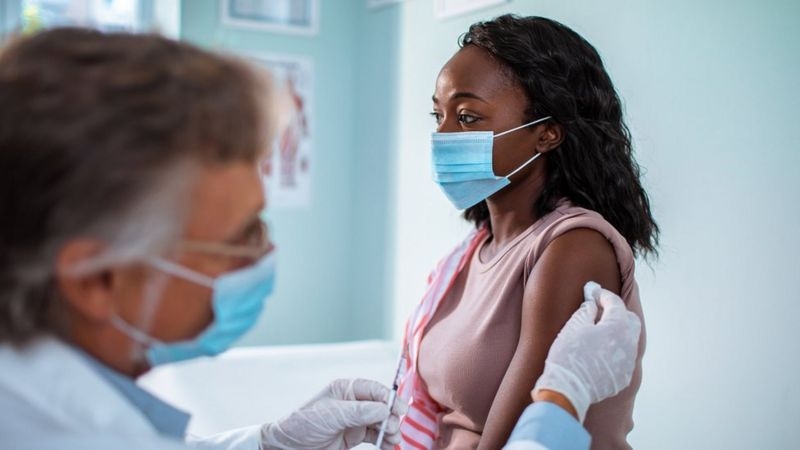
Moderna is filing for US and European regulatory approval of its coronavirus vaccine so that it can be recommended for widespread use.
Regulators will look at trial data for the mRNA vaccine and decide if it is safe and effective enough to recommend for roll out.
Clinical studies show the jab is more than 94% effective at protecting people from becoming ill with Covid-19.
Pfizer, which has a similar jab, has already filed for the same US approval.
UK regulators are also reviewing data on the Pfizer vaccine, as well as another type of Covid vaccine from AstraZenca and Oxford University for emergency approval.
Moderna says it hopes to gain UK approval soon, now that it has trial data from 30,000 volunteers - including high risk groups like the elderly - that suggests it works.
These three front-runner vaccines have different pros and cons.
The AstraZeneca jab is cheaper - around £3 ($4) for a dose, compared to around £15 ($20) for the Pfizer vaccine and £25 ($33) for Moderna's.
And it is potentially easier to distribute because it does not need to be stored under ultra-low temperatures.
But its efficacy in trials - between 62% and 90% - is a bit lower than the Pfizer and Moderna vaccines.
The UK has already pre-ordered doses of all three vaccines:
- 7m of the Moderna jab
- 40m of the Pfizer/BioNTech one
- 100m of the AstraZeneca Oxford vaccine
Dr Alexander Edwards, associate professor in biomedical technology at the University of Reading, said: "This is great news indeed - the more trial data that we have, the greater confidence we have that vaccines can be used to blunt the human cost of Covid-19.
"As the numbers of cases reported grows, confidence grows that this amazing protection will be maintained in a product that can be rolled out to protect the public."
BBC

Russia's unmanned Luna-25 spacecraft has crashed into the Moon after spinning out of control, officials say.

Donald Trump has confirmed that he will not take part in Republican presidential debates with his rivals in the race for the White House.