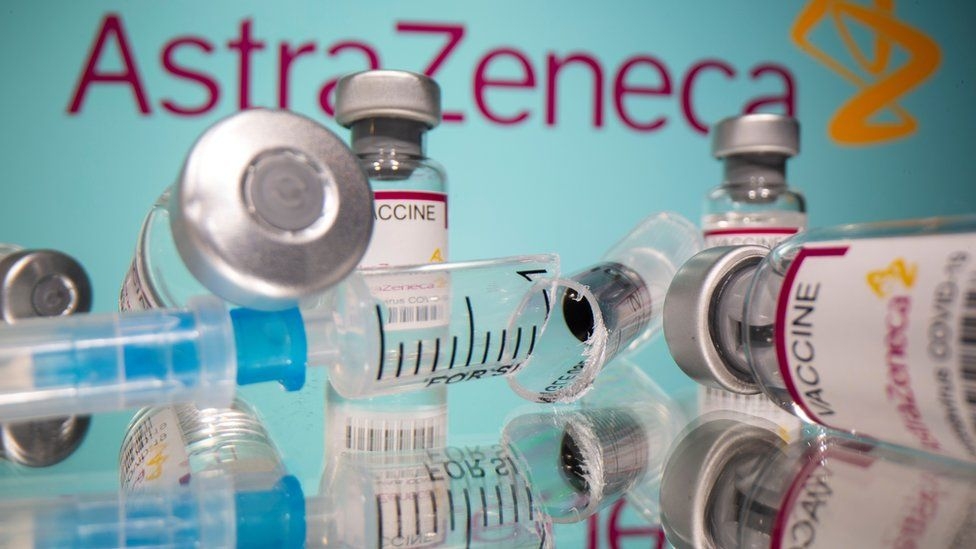
The European Union's medicines regulator has reiterated there is no indication that the Oxford-AstraZeneca Covid vaccine causes blood clots, after several countries paused their rollouts.
European Medicines Agency (EMA) head Emer Cooke said she remained "firmly convinced" that the benefits of the jab outweighed any risks.
An investigation into cases of blood clots in a handful of recipients is ongoing.
The World Health Organization has urged countries not to halt vaccinations.
Vaccine safety experts from the WHO are also meeting on Tuesday to review the Oxford-AstraZeneca jab.
AstraZeneca says a review of 17 million people who received doses in Europe found there were 37 cases of people who had developed blood clots.
Experts say the number of blood clots reported in vaccinated people is no higher than that seen in the general population.
What are European countries doing?
A number of countries have temporarily suspended use of the vaccine, including Germany, France, Italy and Spain.
They said they were pausing the rollout following reports of blood clots in some recipients. Blood clots are solid clumps that form in the blood, which can be life threatening if not treated quickly. The countries stressed that it was a precautionary measure.
"This is a professional decision," German Health Minister Jens Spahn said, adding that he was following the recommendation of the country's vaccine institute.
Finance Minister Olaf Scholz said Germany hoped the vaccine could be used again, and expected the EMA to decide swiftly on how to proceed.
But several medical experts and politicians in Germany, where infections are rising rapidly, have argued that the vaccine should be used until proven unsafe.
A Free Democrat spokeswoman said the decision had set back the entire vaccination rollout. Greens health expert Janosch Dahmen argued that authorities could have provided detailed information about "manageable risk" and continued using the drug.
Other countries, including Austria, have halted the use of certain batches of the drug, while Belgium, Poland, the Czech Republic and Ukraine said they would continue to administer the AstraZeneca vaccine.
A rise in cases has led many countries to tighten restrictions and there are concerns over the pace of Europe's vaccination drive, which has already been affected by shortages.
In Italy, the director general of the medicines authority called the decision to suspend the vaccine "political".
Nicola Magrini told Italian daily newspaper la Repubblica that the vaccine was safe and that the benefit to risk ratio of the jab was "widely positive".
What has the WHO said?
The UN's health body said it was meeting on Tuesday to "review the reports of rare blood coagulation disorders" in people who had received the AstraZeneca vaccine.
On Monday, a spokesman said there was "no evidence" that the incidents were linked to the vaccine.
"As soon as WHO has gained a full understanding of these events, the findings and any unlikely changes to current recommendations will be immediately communicated to the public," WHO spokesman Christian Lindmeier said.
The EMA - which is also currently carrying out a review into incidents of blood clots - said the benefits of having the vaccine outweighed the risks of any side effects.
The UK medicines regulator also said evidence "does not suggest" the jab causes clots, as it urged people in the country to get the vaccine when asked to do so.
What does AstraZeneca say?
The company says there is no evidence of an increased risk of clotting due to the vaccine.
It said that across the EU and the United Kingdom there had been 15 events of deep-vein thrombosis (DVT) - a blood clot in a vein - and 22 events of pulmonary embolism - a blood clot that has entered the lungs - reported among those vaccinated.
These figures were "much lower than would be expected to occur naturally in a general population of this size and is similar across other licensed Covid-19 vaccines".
Professor Andrew Pollard, director of the Oxford vaccine group which developed the Oxford-AstraZeneca jab, told the BBC on Monday that there was "very reassuring evidence that there is no increase in a blood clot phenomenon here in the UK, where most of the doses in Europe [have] been given so far".
Finland has also done a "very careful study" and not found an increased risk, he added.
He said it was "absolutely critical that we don't have a problem of not vaccinating people".
BBC

Russia's unmanned Luna-25 spacecraft has crashed into the Moon after spinning out of control, officials say.

Donald Trump has confirmed that he will not take part in Republican presidential debates with his rivals in the race for the White House.